

How to Keep Sarees Looking New: Washing, Storage and Care Tips
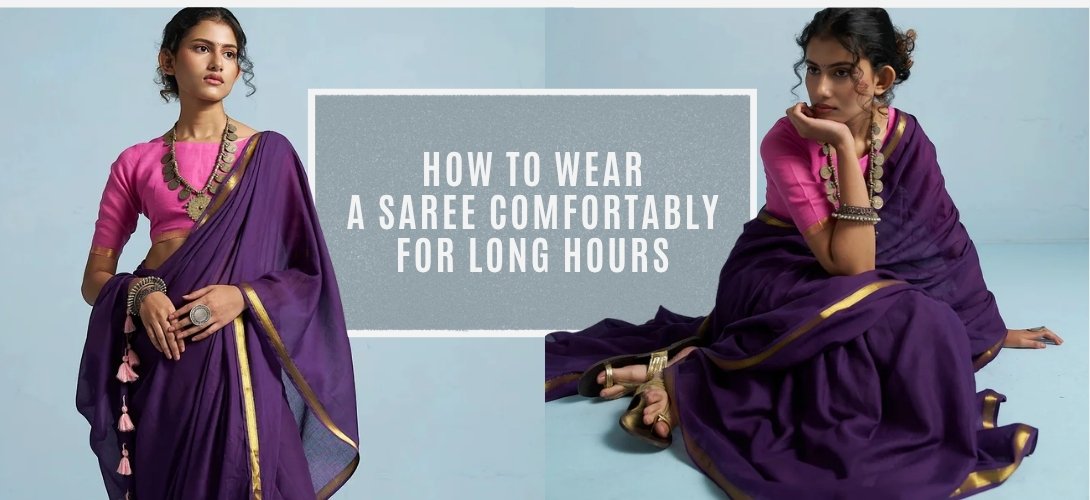
How to Wear Saree Comfortably for Long Hours: Your Ultimate Survival Guide
Written by DUNGRANI fashion |
Every Occasion |
The last time you wore a saree all day, how much of it do you actually remember enjoying? Most women who think about it honestly will admit that a quiet, low-level battle was running in the background the entire time. The petticoat pulling. The pallu slipping. The waistband pressing in.
A good saree day isn’t about tolerating those things. It’s about not having them at all. That’s entirely possible, and it starts well before the draping begins. This guide walks you through exactly what to do differently, from the first fabric decision to the last pin. You’ll learn how to wear saree for long hours with ease, so your next long saree day actually feels like one.
Key Takeaways
➤ Saree comfort depends on the right fabric, proper petticoat fit, a breathable blouse, and stable draping rather than just style.
➤ Lightweight, breathable fabrics like cotton, linen, georgette, and blends help you stay comfortable for long hours.
➤ A well-fitted petticoat and blouse prevent discomfort, slipping, and restricted movement throughout the day.
➤ Proper pinning, balanced pleats, and correct pallu placement keep the saree secure without constant adjustment.
➤ A few comfortable saree-wearing tips like choosing the right footwear, carrying essentials, and doing a trial run ensure all-day ease.
Why Does a Saree Feel Uncomfortable After a Few Hours?
Before solving the problem, it’s helpful to know what’s causing it. Understanding this is the first step in learning how to wear saree comfortably. Most saree discomfort comes down to these root causes:
(i) Wrong fabric choice: A heavy, non-breathable fabric turns into a sauna on your body by hour three. Your body heat has nowhere to go.
(ii) An ill-fitting petticoat: Petticoat comfort is the foundation of your entire drape. If it’s too loose, it rotates throughout the day. If it’s too tight, it digs into your waist and causes real pain.
(iii) A blouse that restricts movement: The moment you lift your arm or take a deep breath and feel resistance, your blouse is already working against you. Knowing how to carry saree comfortably means your blouse has to work with your body, not against it.
(iv) Bad pinning: Too few pins, or pins placed at the wrong spots, means your pleats collapse and your pallu slips within hours.
(v) Wrong footwear: The wrong heel height throws off the entire weight distribution of your saree. This creates a pull at the waist and messes up pleat alignment.
⦿ Now here’s a myth worth busting right away: A heavier saree doesn’t mean a more stable drape. In fact, the opposite is true. A lighter saree with proper pinning will hold better and feel far more comfortable than a heavy one that you’re constantly managing throughout.
How to Wear Saree for Long Hours?
Getting your saree to stay comfortable for eight, ten, or twelve hours is less about practice and more about preparation. When you address each of these areas properly, everything else falls into place on its own:
1. Start with the right fabric (this decides 60% of your comfort)

The saree fabric you pick before you even start draping will decide how your next 12 hours feel. Knowing how to wear saree comfortably is largely a fabric question. This is the single biggest decision, and most people make it based only on how a saree looks rather than how it feels.
Here’s an easy way to think about it:
|
Comfort Level |
Fabric |
Best For |
|
High (12+ hours) |
Mulmul cotton / Bengal cotton / tant, cotton blends, linen, cotton-silk, khadi, viscose/modal, maheshwari silk-cotton, batik cotton, soft georgette, Kota Doria |
Daily wear, office, summer weddings, long events, travel |
|
Medium (6–8 hours) |
Chanderi silk-cotton, tussar silk, light chiffon, tissue silk, crepe |
Evening events, receptions, festive functions |
|
Demanding (2–4 hours max) |
Heavy Kanjivaram, stiff brocade, dense zari work |
Short ceremonies and rituals only |
(i) Cotton (mulmul/Bengal cotton/tant): Considered the "queen" of comfortable fabrics, cotton is highly breathable, skin-friendly, and absorbs sweat. It's the number one fabric to reach for when learning how to wear saree for long hours.
(ii) Cotton blends: Provide the comfort of cotton with less maintenance (wrinkle-resistant) and a softer feel.
(iii) Linen: Extremely breathable, strong, and durable. It has a natural, crisp look that’s professional yet comfortable.
(iv) Khadi: A handspun, eco-friendly fabric that’s breathable and lightweight, helping regulate body temperature.
(v) Viscose/Modal: Very soft on the skin and smooth, making it suitable for sensitive skin and long-term wear.
(vi) Maheshwari silk-cotton: Often termed "woven air," this blend offers the sheen of silk with the breathability of cotton, weighing less than 500 grams, which prevents "saree fatigue".
(vii) Chanderi silk-cotton: Lightweight and sheer with a delicate shine, ideal for keeping you cool and elegant, often featuring small buttis (motifs).
(viii) Batik cotton: Known for its softness and "broken-in" feel, it’s ideal for long, humid days.
(ix) Tussar silk: Lightweight with a natural matte finish and textured surface, perfect for office presentations or daytime events.
(x) Tissue silk: Lightweight and sheer with a gentle shine, perfect for festivals when you want to look festive without heavy weight.
(xi) Georgette: Lightweight and durable with a slightly crinkled texture that resists wrinkles, making it excellent for long days in the office.
(xii) Chiffon: Feather-light and airy, this fabric doesn’t cling, allowing it to remain comfortable, though synthetic versions may be less breathable than silk chiffon.
(xiii) Crepe: A smooth, textured fabric that is wrinkle-resistant, keeping you looking neat all day.
(xiv) Kota Doria: Extremely lightweight with a unique checkered pattern, making it nearly "weightless" for all-day comfort.
2. Get the petticoat right (It carries your entire saree)

The petticoat is the most underrated part of saree-wearing. Most women pick whichever petticoat is lying around. That’s the first mistake, and here are the most practical, comfortable saree-wearing tips to address this issue early:
Your petticoat does three things:
(i) It gives your saree pleats a place to anchor.
(ii) It creates the silhouette.
(iii) It distributes the weight of the fabric across your body.
A wrong petticoat can wreck even the most perfectly draped saree.
Types of petticoats and when to use them:
(i) Cotton petticoat: This is the best choice for long-hour wear. Cotton petticoats are breathable, sweat-absorbing, and allow air circulation. They’re ideal for daily wear, office, and long summer events, and a key part of how to wear saree without feeling heavy in warm or humid conditions.
(ii) Satin or silk petticoat: This works best under georgette and chiffon sarees. The smooth texture allows the saree fabric to glide instead of clinging or creating friction. Don’t use a satin petticoat under a cotton saree as the two fabrics work against each other.
(iii) A-line petticoat: This is the most versatile cut. It’s universally flattering and works with almost every body type and saree style. It gives your pleats a smooth surface to sit on without being too tight or too loose. Learning how to carry saree comfortably throughout a full day almost always involves getting this cut right.
(iv) Mermaid or fishtail petticoat: This works for pre-draped and modern draping styles. It creates a fitted look through the hips and flares at the knees. If you’re wearing a Dungrani ready-to-wear saree, this pairing makes a lot of sense.
(v) Shapewear petticoat: Saree-specific shapewear provides posture support, back smoothing, and gentle waist definition. It encourages you to stand and sit better throughout the day. This is great for weddings and receptions where you’ll be photographed.
Petticoat fit checklist:
Before leaving your house, check these three things:
(i) Waist fit: The drawstring should feel snug, not digging. Leave a two-finger gap. Not more, not less.
(ii) Hip fit: The petticoat should be smooth, not clingy, and not sagging.
(iii) Length: Ankle-length, adjusted for your heel height. If you wear 2-inch heels, your petticoat should sit about 2 inches shorter than your final saree length.
⦿ Pro tip: Tie your petticoat slightly tighter than feels comfortable at home. Movement throughout the day loosens the drawstring naturally. If it feels just right at home, it’ll feel loose by noon.
Drawstring or elastic?
Use a drawstring petticoat for most occasions. You can adjust the tightness throughout the day. Elastic waistbands tend to fold and dig in after a few hours of sitting and standing.
3. Choose the right blouse (It can make or break your 12-hour comfort)

Ask any woman who has worn a saree all day, and she’ll tell you the same thing: the blouse is often the biggest source of discomfort. Understanding how to wear saree comfortably is impossible without exploring different blouse styles and choosing it right. A blouse that’s even slightly off in fit will ruin your entire experience.
Blouse comfort test:
Do this before your event, not on the day of. These checks are among the most overlooked comfortable saree-wearing tips that seasoned saree wearers swear by.
(i) Band test: Put on the blouse and check if the back band sits flat against your skin. If it rides up or gaps, the fit is wrong.
(ii) Deep breath test: Breathe in fully. You should feel no resistance from the blouse fabric across your chest or sides. If you feel tightness when breathing deeply, the blouse needs to be let out.
(iii) Arm lift test: Raise both arms above your head. You should be able to do this without the blouse pulling up or the underarm seam digging in. If it pulls, the armholes are too small.
(iv) Armhole check: The armhole shouldn’t be too wide (causes the blouse to slip off the shoulder) and not too narrow (causes cutting at the underarm). The ideal armhole sits firmly on the shoulder with no restriction.
(v) Lining test: Run your hand along the inside of the blouse. Is the lining smooth cotton? Or is there scratchy embroidery or stiff interfacing pressing against your skin? Everything on the inside should feel soft.
Fabric and lining tips:
(i) Always choose 100% cotton lining for your blouse, especially if you live in a humid climate or you sweat easily. As multiple saree styling sources confirm, synthetic lining traps heat and causes skin irritation during long events.
(ii) Avoid rough embroidery or stiff brocade on the inside panel. The outer side can be as grand as you want. The inner side must be skin-friendly.
(iii) If you tend to sweat, sew in cotton sweat pads at the underarms of your blouse before the event. This simple addition saves you a lot of discomfort.
Closure types: Hooks vs. buttons vs. zipper
▸ Hooks: Most common. Good for adjustable fit. Make sure they’re not too tight at rest, as they get tighter when you eat.
▸ Buttons: More relaxed fit. Good for long days. Less risk of popping open.
▸ Zipper: Very secure, but no adjustment is possible. Only use a zipper blouse if your measurements are perfect.
4. Drape for stability, not just for style

A beautiful drape that falls apart by hour two is useless. The goal here’s a drape that stays in place all day with minimal touching up.
The Nivi drape: 5 rules for an all-day hold:
The Nivi drape is the most common draping style across India. While it’s the most reliable for long-hour wear, exploring other saree draping styles may reveal options that suit your body shape and activity level even better. Mastering it is central to knowing how to wear saree comfortably all day through a full day. Here are five rules that make it last:
▸ Rule 1 ⇛ Tuck the inner end all the way around. Most people only tuck the front. Take the starting end of the saree and tuck it evenly all around the waistband, not just the front panel. This creates a full anchor, not just a partial one.
▸ Rule 2 ⇛ Make medium-width pleats, 5 to 7 of them. Each pleat should be about 1.5 inches wide. Too narrow and they collapse. Too wide and they look messy. Five to seven pleats is the sweet spot.
▸ Rule 3 ⇛ Fan the pleats across the hip bone, not just the navel. Many people pile all the pleats at the centre. Instead, spread them so they fan out slightly. This distributes the weight and keeps them from bunching throughout the day. It’s one of the most practical, comfortable saree-wearing tips for active, long days.
▸ Rule 4 ⇛ Pin the pleats through the petticoat waistband. This is the most important pinning rule. Push your safety pin through the pleats and into the waistband of the petticoat, not just into the petticoat fabric. The waistband is sturdy and won’t tear, but the fabric will.
▸ Rule 5 ⇛ Control your pallu length. The pallu should be long enough to drape gracefully over the shoulder but short enough that the tail doesn’t drag under your feet when you walk. Set this length before you step out.
Shoulder pinning hacks:
Most people pin the pallu at the very top of the shoulder. This is wrong and here’s why: as the day goes on, all the weight of the pallu pulls down on the soft tissue of your neck and shoulder muscles. By hour four, this causes real strain.
Instead, pin your pallu one to two inches toward the shoulder blade. This shifts the weight onto the shoulder bone, which can handle it easily. The pallu still drapes beautifully, and your neck isn’t sore by the time you get home.
Pallu control for active days:
▸ For office and meetings: Fold the pallu once and tuck its end into your waist. This keeps it out of the way completely and is one of the simplest ways to understand how to carry saree comfortably in a professional setting.
▸ For events where you will move a lot: Use two pins on the shoulder instead of one. Pin the edge of the pallu near your upper arm as well.
Modern draping alternatives:
(i) Belted saree drape: A slim belt around the waist adds structure, locks the pleats in place, and takes some weight off the drawstring. It also looks incredibly modern and stylish.
(ii) Pre-pleated storage method: Pleat your saree the night before, pin it, and hang it. This saves you 20 minutes on the day and means your pleats are already set and crisp when you put them on.
(iii) Ready-to-wear sarees: If draping feels like a challenge every single time, this is the solution. Dungrani's ready-to-wear sarees give you the full saree look with absolutely zero draping stress
5. Follow a safety pin strategy

Safety pins get overlooked, but they do more than you'd expect. Knowing how to use them correctly is one of the most underrated comfortable saree-wearing tips you'll ever pick up. Here’s how to use them the right way:
Buy the right pins first:
Don’t use any random pins from the kitchen drawer. Use rust-free, smooth safety pins. Rough or old pins can catch on delicate fabrics and create pulls. Keep three sizes on hand:
▸ Small pins for the blouse hooks (as backup)
▸ Medium pins for the pleats
▸ Large pins for the waist and heavy pallu work
Non-negotiable pin points:
(i) Waist pleats: Pin through the pleats and into the petticoat waistband. Use at least two pins, one near the centre and one closer to the hip. This keeps the pleats from fanning out or collapsing. It’s a foundational part of how to carry saree comfortably across a full day of movement.
(ii) Shoulder pallu: One firm pin, placed 1 to 2 inches toward the shoulder blade (as explained above). This isn’t optional. Without this pin, your pallu will need constant adjusting.
(iii) Pallu edge (optional but helpful): For very active days, lightly pin the edge of the pallu near your upper arm to the side of your blouse. This stops the pallu from swinging forward every time you move.
Pearl or button trick for delicate fabrics:
If you’re wearing a delicate fabric like mulmul or soft chiffon, direct pin pressure can create small holes or pulls. To prevent this, place a tiny pearl bead or a small button behind the safety pin before you close it. The bead spreads the pressure over a wider area of fabric and protects the weave. Professional saree stylists use this trick for sheer and lightweight drapes.
Fashion tape as a backup tool:
Double-sided fashion tape works well for securing the front end of the inner tuck and keeping the blouse neckline in place. It’s especially useful for deep-neck blouses or when your saree fabric is particularly slippery.
If you want to use fewer pins overall, pair a good saree shapewear petticoat with a saree belt. This combination can reduce your pin count from eight to just three.
6. Your shoes can make your saree uncomfortable

This sounds like an exaggeration. It’s not. The heel height you choose changes the angle at which your saree sits. The wrong choice creates a constant downward pull at the waist and causes the front pleats to drag. If you're serious about how to wear saree, your footwear decision deserves just as much thought as your fabric choice.
Footwear hierarchy for saree comfort:
|
Rank |
Footwear |
Best For |
Why It Works |
|
1 |
Block heels or wedges |
Weddings, receptions |
Weight spreads evenly across the foot |
|
2 |
Kitten heels (1–2 inches) |
Office, daily events |
Low pressure, stable base |
|
3 |
Embellished flats |
Daytime events, travel |
No pressure at all |
|
4 |
Stilettos |
Short ceremonies only (2–3 hours max) |
Narrow base, puts the entire body weight on one point |
Heel-height-saree-length rule:
Always decide on your footwear before you set the final length of your saree. This is important. If you set the saree length in flat shoes and then wear 3-inch heels, the hem will rise, and your petticoat will show at the front.
The correct sequence: pick your shoes first, then stand in those shoes while your saree is being draped or while you are setting the pleat length.
Break-in protocol:
New shoes worn at a big event are a disaster. Wear your event shoes at home for at least 2 to 3 hours before the function day. Walk around, sit down, climb a few steps. This breaks in the sole and identifies any pressure points before they become blisters. Understanding how to wear saree for long hours means your feet have to be as prepared as your drape.
For open-back sandals and heeled mules, stick anti-blister patches or heel pads at the points where friction happens. These are available online and also at many chemists' shops at affordable prices, and they save you hours of pain.
For complete guidance that goes beyond comfort into style pairings for different saree types, our guide to styling sarees with footwear covers the full spectrum of elegant combinations.
7. Move comfortably

Wearing a saree correctly is only half the job. Moving in it gracefully is the other half. Here’s how to stay comfortable in saree whole day and move freely:
(i) Walking in a saree without tripping
▸ Take slightly shorter steps than you normally would. Your normal stride is too wide for a saree drape with neat pleats.
▸ When climbing stairs, lift the front pleats lightly with one hand and hold the railing with the other. Don’t try to climb stairs hands-free in a saree. Nobody does it gracefully, no matter how experienced they are.
▸ Keep your weight even on both feet. Don’t lean forward when walking.
▸ Avoid rushing. Quick, short bursts of speed are what dishevel pleats fastest.
(ii) Sitting in a saree without ruining the drape
Before you sit down, do these two things:
▸ Smooth the pleats flat with your hand so they fan out neatly instead of bunching.
▸ Arrange the pallu to one side or in front of you, not behind you. A pallu tucked behind your seat gets sat on and pulls at your shoulder.
Once you sit, sit all the way back in the chair. Sitting on the edge keeps your core muscles tense and puts pressure on the waist area where the saree is pinned. Sitting fully back distributes the weight and feels far more natural. It's a quiet but significant part of how to wear saree comfortably for long hours in wedding events, where most of your time is spent seated.
(iii) Restroom survival ideas
When you enter the restroom:
▸ Hold the front pleats and the inner panel together in one hand before you do anything else.
▸ Keep the hem elevated off the floor throughout. The floor of any public restroom is the last place your saree should touch.
▸ Tuck the pallu into your waist or drape it over your forearm so it stays completely out of the way.
▸ After you’re done, step out and reset everything calmly before walking back into the hall. Pleats first, then the pallu, then check the shoulder pin.
⦿ Always carry one spare safety pin in your handbag. Not five. Just one. That one pin has saved more saree days than any other hack on this list.
(iv) Dancing and high-movement event hacks
Garba nights, sangeet functions, and cocktail evenings require a slightly different approach. If you've been wondering how to carry saree comfortably at a high-energy event without it falling apart mid-dance, these are the solutions:
▸ Choose a slightly shorter saree length for events where you’ll dance. The hem should sit just above the ankle, not at it.
▸ Light Bandhani cotton and soft georgette are your best friends for Garba. They move with you and don’t trap heat.
▸ For sangeet and high-energy dancing, pre-stitch your pleats using a needle and thread along the top fold. This takes five minutes the night before and means your pleats won’t separate, no matter what. You can remove the stitching after the event.
▸ Pin the pallu firmly with two pins on the shoulder and consider tucking the tail end securely into the waist for dancing portions.
Quick-Reference Saree Comfort Guide by Occasion
Once you know the general principles of how to wear saree comfortably, it helps to have a go-to reference for specific occasions. Use this quick guide to make quick, confident decisions about fabric, draping style, and footwear based on where you’re heading:
|
Occasion |
Best Fabric |
Drape Style |
Footwear |
|
Wedding / Reception |
Soft georgette, tissue silk, light chiffon, Chanderi silk-cotton, Maheshwari silk-cotton, cotton-silk |
Classic Nivi or belted |
Block heels or wedges |
|
Office / Daily wear |
Mulmul cotton, linen, cotton blends, khadi, viscose/modal, Kota Doria, crepe, soft georgette, batik cotton |
Simple tucked Nivi |
Kitten heels or flats |
|
Travel |
Mulmul cotton, cotton blends, soft crepe, soft georgette, Kota Doria, chiffon |
Pre-pleated, compact pallu |
Flats or low wedges |
|
Festival / Garba |
Bandhani/batik cotton, soft georgette, tissue silk, Kota Doria, khadi |
Shorter length drape |
Comfortable flats or wedges |
|
Casual day out |
Mulmul cotton, khadi, linen, batik cotton, Kota Doria, viscose/modal, cotton blends |
Relaxed Nivi or belt drape |
Flats |
Emergency Saree Kit Every Woman Should Carry
No matter how perfectly you prepare, events throw surprises. A pin pops. The pallu slips after a round of dancing. Your heel gives you a blister. The emergency kit handles all of it, and putting one together is one of the most practical solutions for how to manage saree for long time without panic.
Pack this in a small pouch and keep it in your handbag, or give it to a trusted friend to hold.
(i) 4 to 5 safety pins — a mix of medium and large sizes
(ii) A strip of double-sided fashion tape — for slipping necklines and securing the inner tuck
(iii) 2 to 3 blister patches — for your heels and the toe strap area
(iv) Mini deodorant or sweat-absorbing powder — for long summer events
(v) A small hair elastic — brilliant for holding pleats together during restroom visits
(vi) A compact mirror — so you can check your pallu and pleats without hunting for a full-length mirror
(vii) Mini lint roller — georgette and chiffon attract lint like magnets
(viii) Tissue and wet wipes — for fabric stains and general freshening up (the best way to wear saree comfortably for office days and long events)
(ix) 1 spare hook-and-eye closure — for blouse emergencies when a hook pops off mid-function
This entire kit fits in a pouch the size of your palm and weighs almost nothing. It has saved more saree days than any expensive saree fixing product ever will.
Do This Before Every Big Saree Event: The Comfort Trial Run
Professional stylists and experienced saree wearers follow this practice before every major event. It’s called a “trial run”, and it makes an enormous difference. It’s also one of the most practical saree wearing tips for beginners and the best time to finalise your accessories for sarees.
At least two days before your event, wear your complete saree look at home. This means the saree, the blouse, the petticoat, the footwear, and all the jewellery. Wear it for at least three to four hours. Go about your day normally. Sit, stand, walk around, climb stairs, and eat something.
What to look for during the trial run:
(i) Tightness zones: Is the blouse digging in anywhere? Is the petticoat waistband cutting? If yes, fix the fit before the event day.
(ii) Slipping points: Where does the drape start to come loose first? Note it and add a pin at that exact spot. Identifying slipping points helps you master how to manage saree in long events without mid-event panic.
(iii) Heat build-up areas: Are you overheating at the back, underarms, or waist area? If yes, reconsider the fabric or swap the blouse lining.
(iv) Footwear friction: Where are your shoes pressing? Mark those spots and apply blister patches there on the day of the event.
(v) Pallu behaviour: Does the pallu stay on the shoulder for more than an hour without being touched? If not, adjust your pinning angle.
After the trial run, you’ll have a clear, specific list of adjustments. Fix every single item on that list before the event. This isn’t extra work. This is the work that makes everything else effortless on the actual day.
⦿ A simple rule to follow: If you stay comfortable for three hours at home during the trial run, you’ll handle 10 hours at the event with confidence.
Dress for Comfort, Shop with Intention!
Comfort is a decision you make before the event, not during it. The right fabric, a fitted petticoat, a blouse that lets you breathe, deliberate pinning, and the right heel height. Follow these tips to wear saree comfortably, do a trial run, and your next long saree day will feel completely different.
Dungrani offers a thoughtfully curated saree collection, from lightweight handwoven cotton-silks and drape-friendly georgettes to hand-painted organza and sustainable Liva weaves, so the right saree for your comfort level is always within reach. Connect with us or book a video shopping appointment to get easy saree wearing tips for comfort and occasion needs.
Frequently Asked Questions
1. Can we wear saree for long hours?
Yes, you can wear a saree for long hours comfortably by choosing lightweight, breathable saree fabrics like cotton, linen, georgette, or crepe, which are ideal for all-day wear.
The right saree comfort tips, such as using security pins and wearing ready-to-wear or pre-stitched options, help manage movement and comfort, making them suitable for office or daily household chores.
2. How to sit comfortably in saree?
To sit comfortably in a saree, lift the front pleats slightly before sitting to prevent pulling. On a chair, move the pallu to avoid sitting on it, and on the floor, gather the fabric around your legs, ensuring your underskirt allows movement.
Ensure the petticoat or shapewear isn’t too tight, and consider trying breathable saree shapewear for better flexibility and comfort.
3. How to walk easily in saree?
How to handle saree easily while walking involves taking smaller steps, wearing your footwear before draping to ensure the correct length, and keeping the front pleats securely pinned.
For easy movement, kick the pleats lightly while walking to prevent tripping, maintain a moderate pace, and consider pinning the pallu to your blouse for stability.
4. How to avoid discomfort while wearing saree?
To learn how to wear saree without discomfort, prioritise breathable, lightweight saree fabrics like cotton, linen, or georgette, and ensure the petticoat is not too tight.
Proper saree draping technique, such as wearing shoes before you start, securing the pleats, and following the right blouse fitting tips, will prevent the saree from slipping, dragging, or restricting movement.
5. Which is better, saree shapewear or petticoat?
Saree shapewear is generally better for a sleek, modern "mermaid" silhouette, comfort, and walking, as it eliminates waist bulk and allows for easy movement. However, traditional cotton petticoats are better for breathability in hot weather, affordability, and providing a stable foundation for heavy, traditional sarees.
Recent Posts


How to Style a Digital Printed Saree for Casual, Office & Party Looks

How to Style a Sequin Saree for a Party: Blouse, Jewellery & Drape Ideas

How to Wear a Saree for a Cocktail Party: Complete Styling Guide

How to Style a Party Wear Saree for a Glamorous Look?

How to Look Glamorous in a Saree: Easy Styling Tips to Look Beautiful and Stylish

Pre Stitched Saree vs Pre Draped Saree: Features, Fit, and Everything You Need to Know Before Buying

How to Choose Party Wear Saree: Your Ultimate Shopping Guide

What Is Organza Saree? Complete Guide to Fabric, Styles and Buying Tips

What Is Georgette Saree? Fabric Guide and Why Women Love It

How to Wear Saree for Plus Size Women: Slay Every Look With These 15 Styling Ideas

How to Travel With a Saree: 11 Smart Packing and Styling Tips for Every Trip

How to Style a Saree With a Belt: 7 Modern Styling Tips to Rock the Indo-Western Look

How to Wear Saree During Pregnancy: Your 101 Guide to Effortless Maternity Style and Comfort

How to Choose the Best Blouse Necklines for Your Unique Face & Body Shape?

How to Master Office Wear Saree Styling: Easy Draping Tips for a Professional Look

What’s the Best Saree for Rainy Season: Your Go-to Fabrics, Colours, & Hacks Guide

How to Choose the Best Blouse Designs for Ready to Wear Saree?

7 Expert Saree Styling Ideas for Engagement Every Bride Needs

How to Style Saree for Wedding and Be the Best-Dressed Guest

How to Wear Saree Step-by-Step: The New Girl’s Handbook

What Jewellery to Wear With Saree: Expert Styling Tips to Pair Pieces Beautifully

How to Choose Accessories for Saree: Your Ultimate Styling Guide to Nailing Every Look

Best Saree for Summer Wedding: Fabrics, Colours and Styling Choices for Guests

Mother's Day Saree Ideas: Celebrating the Strongest Woman You Know With Thoughtful Gift Choices She'll Adore

Best Blouse Styles for Sarees: A Complete Selection Guide

Saree Styling with Footwear: Ultimate Guide to Elegant Pairings

5 Mistakes to Avoid While Draping Saree and How to Fix Them?

Summer Saree Fabric Guide: Top 5 Picks for Hot Indian Weather

5 Tips To Choose The Best Saree For Your Body Type: Complete Styling & Fabric Guide

Best Saree Colours for Skin Tone: Fair, Wheatish, Dusky & Dark Skin Guide

How to Style Embroidered Sarees for Every Occasion: Expert Tips & Outfit Ideas

How to Look Slim in Saree: 11 Proven Styling Tips That Work (With Examples)

How to Wear Ready to Wear Saree?

Types of Saree Fabrics: The Ultimate Shopper’s Cheat Sheet

Saree Trends 2026: Top 20 Sarees Your Wardrobe Must Have

35 Iconic Saree Draping Styles: Your Ultimate Guide to the Traditional and Modern Drapes


