

How to Keep Sarees Looking New: Washing, Storage and Care Tips
Saree Styling with Footwear: Ultimate Guide to Elegant Pairings
Written by DUNGRANI fashion |
Every Occasion |
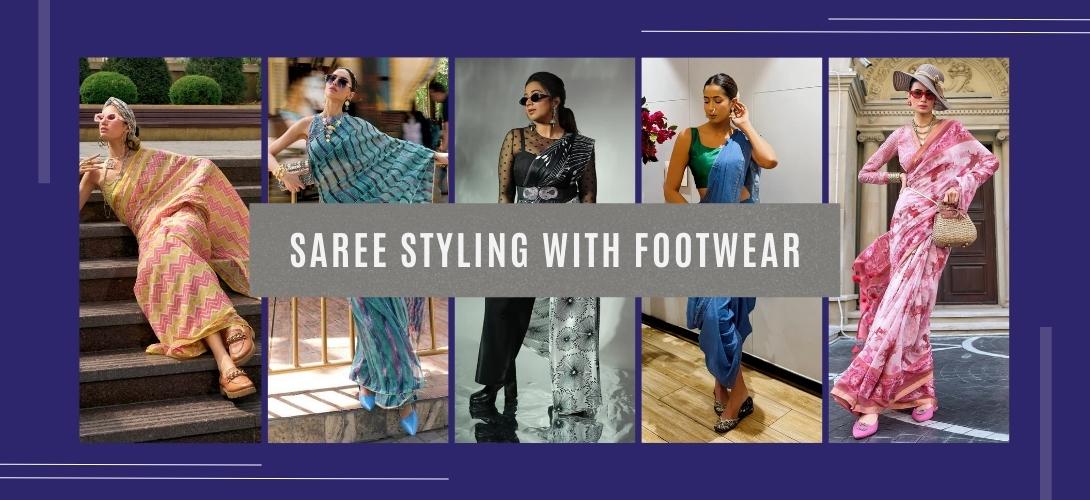
How much thought do you actually give to saree styling with footwear? If your answer isn’t much, you’re probably getting away with it sometimes and not realising when you aren’t. Footwear is one of the most overlooked parts of a saree outfit, and it has a bigger impact than you give it credit for.
If you're deciding what footwear goes with saree, this guide will help you. Whether it’s for a wedding, work event, or festival, you’ll find the best options, expert tips on fabric pairings, occasion suitability, and where each style falls short.
Key Takeaways
➤ Footwear impacts your posture, hemline length, stride, and the overall look of your saree. So, it's a foundational styling choice.
➤ Always put on your footwear before draping. This helps you get the right saree length with heels or flats. The saree hem should fall about half an inch above the floor.
➤ Stilettos, platforms, and strappy heels add flair to formal sarees. Block heels and wedges balance comfort with elegance.
➤ Kolhapuris, juttis, ballerinas, loafers, and sneakers suit casual, cultural, or creative settings.
➤ The right pairing depends on occasion, saree fabric weight, comfort needs, and walking surface.
Why Saree Styling With Footwear Is Important?
Your footwear does three things when you wear a saree.
They change your posture. Heels tilt your body slightly forward, which makes your pallu fall more cleanly. This is an important detail when learning how to style sarees with heels. Flats keep your posture neutral. Neither is wrong, both give a different feel.
They control your hemline. Always wear your footwear before you drape your saree. The heel height changes how long the saree should be. The hem should sit about half an inch above the floor, not dragging, not too short.
They set the tone of your look. An embellished stiletto is perfect for a grand occasion and complements the latest saree trends. A Kolhapuri flat looks very grounded and traditional. It pairs beautifully with classic saree draping styles. Your footwear communicates before you say a word.
The 3 rules of saree footwear:
(i) Match the energy of the occasion
(ii) Balance the weight and embellishment of your saree
(iii) Prioritise your comfort for the duration of the event
Which Footwear Suits Saree?
The right pair of footwear doesn't just add height; it changes how you walk, how the fabric flows, and how comfortable you feel by the end of the day. That’s why mastering saree styling with footwear is essential. Here’s a guide to the most popular footwear choices and how to pair them with your favourite sarees:
1. Stiletto Heels

Stiletto heels are a specific subcategory of high heels defined by their long, thin, and tapered shape. Named for the Italian stiletto dagger, these heels have a needle-like look. They usually have a tiny ground-contact area, often under 1 cm. While they can vary, they typically range from 1 to 10 inches.
Reasons to choose stilettos with your saree:
(i) Stilettos create the optical illusion of longer, slimmer legs, which balances the volume of a saree.
(ii) The extra height stops the saree from wrapping or dragging at the hemline. This is key to how to style sarees with heels while keeping the drape intact.
(iii) These heels naturally alter the wearer's gait and posture. This makes them a popular choice in many saree style hacks to look slimmer.
(iv) Their sleek design adds a layer of sophistication and glamour.
Best occasions: Awards galas, corporate dinners, keynote presentations, high-stakes client meetings, fashion and art exhibitions, festive soirées, red carpet, media events, luxury parties, cocktails, destination weddings (indoor), wedding receptions, sangeet nights, date nights, anniversaries, high-profile dinners
Best saree fabrics: Georgette, chiffon, net, satin, Banarasi silk, Kanjivaram silk, tissue silk, organza sarees
Best stiletto styles for sarees: Metallic stilettos, embellished and stone-studded stilettos, pointed-toe pumps and slingbacks, transparent and strappy styles, open-toe and sandals
Limitations of wearing stilettos with sarees:
(i) For events like day-long weddings or office hours where you'll be on your feet for several hours, they won't be suitable.
(ii) If you're using public transport or walking long distances, stilettos are impractical and can ruin your gait. This makes it harder to manage how to walk in heels with saree confidently.
(iii) Avoid stilettos on grass, sand, or gravel. Stilettos will sink into soft ground, making it difficult to walk and potentially causing you to trip.
(iv) During the monsoon or on highly polished indoor floors, stilettos offer less grip.
(v) For casual cotton or mulmul sarees, stilettos often look too formal.
2. Block Heels

Block heels are a type of footwear characterised by a broad, solid, and chunky base. They have a wide surface area. This shape gives strong support and spreads your body weight evenly. Unlike the thin, needle-like stiletto, they offer more stability. This makes them an important option in saree styling with footwear.
Reasons to choose block heels with your saree:
(i) The broad base of a block heel helps prevent ankle rolling. This makes walking easier than in stilettos, especially on uneven surfaces like lawns or carpeted halls.
(ii) Block heels provide the necessary structural support for heavily pleated or weighted sarees. This reinforces the balance between saree draping and footwear.
(iii) By distributing pressure across a larger surface area, these heels reduce foot fatigue and ankle strain.
(iv) They offer a graceful lift, usually recommended at 1.5 to 2.5 inches. This elongates the silhouette and helps the saree hem fall neatly. You stay stable while looking elegant.
Best occasions: Daily office wear, field visits, off-site meetings, conferences, trade shows, pandal hopping, temple visits, exhibitions, shopping festivals, festive luncheons, communal feasts, mehendi, haldi ceremonies, baraat, sangeet, baby showers, housewarmings
Best saree fabrics: Linen, cotton and handloom, cotton-silk blends, Banarasi silk Sarees, Kanjivaram silk, art silk Sarees, chiffon, organza Sarees, georgette sarees.
Best block heel styles for sarees: Embellished and ethnic blocks, metallic finishes, Kolhapuri and mule heels, transparent detailed blocks, pointed-toe block pumps
Limitations of wearing block heels with sarees:
(i) For formal evening receptions or cocktail parties, block heels can sometimes look too chunky or casual. This is true when exploring how to style sarees with heels for high-glam events.
(ii) If your saree has a heavy, detailed border, a chunky block heel might compete for attention.
(iii) For a simple cotton or mulmul saree worn on a casual day, these heels can feel over-the-top.
(iv) With a short saree drape that exposes the ankles, block heels can make the feet look wider, and the legs appear shorter.
3. Kitten Heels

Kitten heels are low, slender high heels that typically measure between 1 and 2 inches (2.5–5 cm) in height. They’re often described as a petite or "trainer" version of the stiletto, featuring a thin and sometimes slightly curved shape. In saree styling with footwear, they offer a refined middle ground between flats and higher heels.
Reasons to choose kitten heels with your saree:
(i) The low height reduces pressure on the balls of the feet and calves. This makes them reliable and comfortable footwear for saree during long events.
(ii) Unlike flats, kitten heels give a slight lift. This helps improve posture and makes sure the saree hemline flows naturally and stays aligned.
Best occasions: Daily office wear, board meetings, presentations, conferences, networking events, temple visits, morning poojas, art gallery openings and exhibitions, school and college functions, daytime wedding rituals, pre-festive shopping, community gatherings, anniversaries, intimate dinners, hosting at home, social brunches
Best saree fabrics: Pure cotton, chiffon, georgette, linen, Muga silk, art silk, soft silk, crepe sarees
Best kitten heel styles for sarees: Embellished and embroidered kitten heels, slingback and pointed-toe pumps, ethnic mule heels, metallic and nude strappy sandals
Limitations of wearing kitten heels with sarees:
(i) For cocktail parties or grand receptions, a kitten heel lacks the necessary "oomph."
(ii) Modern or experimental drapes can make legs look shorter when paired with kitten heels. This can affect proportions in saree styling with footwear.
(iii) The low 1.5-inch lift may not keep a long hem off the floor, risking trips or stepped-on pleats.
(iv) With a heavy Banarasi or Kanjeevaram, a slender kitten heel looks top-heavy.
(v) Despite the short height, the pencil-thin sole still sinks into grass, mud, or gravel as easily as a stiletto.
4. Wedge Heels

Wedge heels are defined by a single, continuous sole that serves as both the heel and the base of the shoe. Unlike standard heels, where the heel is a separate piece attached only to the back, a wedge runs the entire length of the shoe, from the heel to the toe.
In footwear styling for saree, wedges are often chosen when prioritising stability and comfort while still maintaining height.
Reasons to choose wedges with your saree:
(i) Wedges distribute body weight evenly across the entire foot rather than concentrating it on the ball of the foot. This significantly reduces foot fatigue.
(ii) Their broad soles provide excellent grip and control.
(iii) Wedges provide a steady lift, ensuring the saree drapes perfectly. It stays about 0.5–1 inch above the ground, which helps prevent the saree fabric from dragging and tripping.
(iv) The lower incline of a wedge reduces stress on the arches and Achilles tendon. This is better than stilettos and helps keep your feet aligned naturally.
Best occasions: Event planning and management, trade fairs and expos, pandal hopping, religious processions, exhibition shopping, outdoor birthdays and garden parties, monsoon weddings and festivals, engagement ceremonies, pre-wedding shoots, sangeet and dance performances, destination weddings
Best saree fabrics: Chiffon, georgette, mulmul and soft cotton, Chanderi, linen, satin, Sambalpuri and handloom, chinon, art silk sarees
Best wedge styles for sarees: Embroidered ethnic wedges, metallic and zari-finished wedges, jute-wrapped wedges, transparent and embellished wedges, Kolhapuri wedges
Limitations of wearing wedges with sarees:
(i) For high-glamour receptions or formal cocktail parties, wedges seem too casual. They also feel heavy. This is important when considering how to style sarees with heels for these events.
(ii) With a heavy Banarasi or Kanjeevaram, wedges make the lower half look excessively bulky. This becomes a visual imbalance and a subtle but impactful saree draping mistake.
(iii) With a short or pre-draped saree with a slit, wedges shorten the legs and widen the ankles.
(iv) In corporate settings, wedges, in cork, rope, or jute, look too relaxed or "beachy."
(v) Their rigid soles produce a "stomping" walk rather than a fluid stride.
5. Platform Heels

Platform heels are defined by a thick, raised sole under the front (ball) of the foot, which is paired with a separate heel at the back. This design reduces the overall incline of your foot. This lets you reach a lot of height without the back strain or "foot drama" of regular high heels.
Reasons to choose platform heels with your saree:
(i) Platform heels add height, making the saree drape beautifully. They also keep the hemline from dragging or bunching.
(ii) The thick soles give the illusion of longer legs. They can also make ankles look smaller, which helps create a more balanced body proportion. This is important to mastering how to style sarees with heels for a flattering silhouette.
(iii) Unlike narrow heels, platforms offer a wider and more stable base, which helps prevent wobbly ankles.
(iv) Their sturdy construction makes them a reliable partner for heavier sarees
Best occasions: Gala awards, formal dinners, media and public relations events, fashion and luxury brand launches, pandal visits, film festivals and premieres, art exhibitions, lifestyle shows, pre-wedding photoshoots, festive high teas, monsoon events
Best saree fabrics: Organza, net, satin, Banarasi silk, Kanjeevaram silk, brocade, velvet, embroidered sarees
Best platform heel styles for sarees: Embellished and bridal platforms, metallic gold and silver platforms, floral tapestry and satin platforms, ethnic wedge platforms, transparent strap platforms
Limitations of wearing platform heels with sarees:
(i) Platform shoes with a thick base clash with chiffon or organza sarees. This disrupts fluidity in saree styling with footwear.
(ii) Their inflexible soles lead to a heavy-footed walk, ruining the float of lightweight sarees.
(iii) Platforms in cork, wood, or foam lean "clubwear," feeling out of place at a pooja or temple wedding.
(iv) With narrow pleats, the wide footprint increases the chance of your heel catching the fabric.
(v) Unlike a thin heel, platforms don't visually extend the leg through a slit, legs can look shorter and stockier.
6. Strappy Sandals

Strappy sandals are a broad category of open-toed footwear defined by multiple straps that secure the sole to the foot. "Strappy" refers to the style of the shoe's upper, not the heel height or shape, even if it's often tied to high heels.
In modern saree styling with footwear, strappy designs are valued for their versatility and visual lightness. They can have any type of base, including flats, block heels, wedges, stilettos, or platforms.
Reasons to choose strappy sandals with your saree:
(i) Their open structure makes them a preferred choice for summer events or daytime gatherings.
(ii) Ankle-strap versions are great for making legs look longer. They add a classy touch without overpowering the saree.
(iii) Features such as adjustable ankle and back straps help keep the foot stable and secure. This is important for handling the long pleats of a saree while walking or dancing.
Best occasions: Office parties and networking events, creative industry meetings, festive celebrations, art and fashion exhibitions, brunch and day parties, date nights and dinners, summer weddings, cocktail parties, mehendi functions, sangeet nights
Best saree fabrics: Tissue silk, Chanderi silk, Maheshwari silk, silk blends, chiffon, georgette, crepe, net, organza, satin sarees
Best strappy sandal styles for sarees: Metallic multi-strap stilettos, transparent and clear straps, embellished ankle loops, T-strap and slingback blocks, ethnic strappy wedges
Limitations of wearing strappy sandals with sarees:
(i) With a heavy Banarasi, Kanjeevaram, or Zardosi-bordered saree, thin straps look visually lost or weak.
(ii) In a formal office, showing too much foot can look unprofessional. This can affect how you approach how to style sarees with heels in corporate environments.
(iii) Very thin straps dig into the skin, causing swelling after hours of wear.
7. Kolhapuris

Kolhapuris are traditional, open-toed leather slippers. They’re handmade and come from Maharashtra, India. These slippers date back to the 13th century. They’re known worldwide for their unique T-strap design and detailed braiding. Plus, they use no nails or glue in their traditional construction.
Reasons to choose Kolhapuris with your saree:
(i) Authentic leather Kolhapuris are known for shaping to your feet over time. This gives you a near-custom fit, perfect for standing during long rituals or events.
(ii) The open structure is great for the Indian climate. It keeps feet cool and cuts down on sweat. This is especially helpful when deciding how to style saree with flats for summer celebrations.
(iii) Flat Kolhapuris, unlike high heels, offer a stable, "rooted" look. They balance the bulk of heavy sarees and reduce the risk of tripping or ankle strain.
Best occasions: Daily office wear, creative industry meetings, workplace cultural days, exhibitions and craft fairs, literature festivals and art openings, temple visits, shopping marathons, travel and airport looks, traditional folk dances, intimate home poojas, family brunches and luncheons, mehendi and haldi ceremonies
Best saree fabrics: Cotton, mulmul, linen, khadi, Kanjeevaram silk, Banarasi silk, Paithani silk, tussar silk, art silk, ajrakh and block print sarees
Best Kolhapuri styles for sarees: Kolhapuri flats and slides, Kolhapuri wedges, embellished block heels, platform heels
Limitations of wearing Kolhapuris with sarees:
(i) For cocktail parties or formal receptions, Kolhapuris look too casual or "Bohemian."
(ii) With chiffon, net, or shimmer georgette, their rugged leather texture competes with the delicate drape.
(iii) Being flat, they make it easy to step on a long hem or trip over heavy pleats.
(iv) Being leather, water can stiffen them, cause odour, or bleed dye onto your feet and saree hem. This affects overall presentation regardless of whether you’re following how to style sarees with heels or flats.
(v) In a strict corporate setting, Kolhapuris look too laid-back.
8. Juttis and Mojaris

Juttis and Mojaris are traditional, handcrafted Indian slip-on footwear typically made of leather. They may look alike and are often confused in fashion today. However, they come from different regions and have their own unique traits. This makes them an important consideration in saree styling with footwear.
Juttis originate from Punjab, while Mojaris are native to Rajasthan. Juttis generally have a flat or rounded front. Mojaris are known for their curled, upturned toe (the Nok). This gives them a regal, dramatic shape. They pair beautifully when considering how to style embroidered sarees for festive or wedding looks.
Reasons to choose juttis and mojaris with your saree:
(i) These shoes showcase zardosi, mirror work, and phulkari embroidery. You can match the handiwork of your saree, like a Banarasi or Chanderi, to your footwear.
(ii) Juttis are flat, which gives them great stability. This makes them a safe choice for crowded places, dancing at a sangeet, or walking on grass.
(iii) Unlike strappy sandals or stilettos, juttis have a smooth, closed surface. This design keeps the delicate threads or lace of a saree hem from snagging on buckles or heels.
(iv) These shoes are mostly made of leather or fabric. They breathe well and feel comfortable over long periods, especially if they’re well-cushioned.
Best occasions: Daily office wear, conferences and summits, creative industry meetings, pandal hopping, exhibition shopping, literature festivals and art openings, travel and airport looks, temple visits, intimate family gatherings, pre-wedding shoots, mehendi and haldi ceremonies, sangeet and dancing
Best saree fabrics: Banarasi silk, Kanjeevaram silk, raw silk, Gajji silk, tissue silk, cotton and mulmul, linen, Chanderi, Kota Doria, chiffon, georgette, organza sarees
Best jutti and mojari styles for sarees: Designer bridal juttis, floral and printed juttis, mirror work mojaris, metallic and sequin juttis, Rajasthani mojaris
Limitations of wearing juttis and mojaris with sarees:
(i) With modern chiffon, net, or satin sarees, juttis look too heavy and traditional.
(ii) Being flat, juttis risk the saree sweeping the floor or catching underfoot, damaging the fabric or border.
(iii) With a fusion saree, blazer, crop top, or leather belt, the ethnic look of a mojari feels out of place. This limits versatility in how to style sarees with heels or contemporary formats.
(iv) Raw leather mojaris are vulnerable to humidity and rain, causing odour and ruining the sole and embroidery.
9. Ballerinas

Ballerinas, or ballet flats, are low-profile, closed-toe shoes. They’re inspired by the slippers worn by ballet dancers. They’re defined by their flat soles, low-cut fronts that expose the top of the foot, and minimalist construction.
Reasons to choose ballerinas with your saree:
(i) Ballerinas are the safest choice for busy events or stairs. They offer a flat, stable surface, making it easier to manage heavy saree pleats. This is especially helpful if you plan to switch out of heels after learning how to style sarees with heels for the main event.
(ii) Their smooth, closed design lacks the buckles, straps, or sharp heels that often catch on delicate saree hemlines or lace borders. This helps avoid common footwear mistakes with saree.
(iii) Ballerinas are flexible and light. They make an ideal "backup" pair to stash in your bag. When your heels get uncomfortable, you can quickly switch to them.
Best occasions: Daily office wear, long-haul business travel, conferences and workshops, art gallery openings, museum visits and historical tours, literature festivals, exhibition shopping, communal feasts, social brunches, garden parties, birthday parties, get-togethers, intimate anniversary dinners, baby showers
Best saree fabrics: Mulmul cotton, pure handloom cotton, Bengal cotton, khadi, crepe, georgette, linen blend sarees
Best ballerina styles for sarees: Embellished and ethnic bellies, pointed-toe ballerinas, wedge-heel ballerinas, minimalist and mesh flats, metallic and nude tones
Limitations of wearing ballerinas with sarees:
(i) Their casual, youthful look lacks the maturity needed for formal events or grand receptions, where many ask, “Can we wear heels with saree?” instead for elevation.
(ii) With a heavy Kanjeevaram or Banarasi, a thin-soled ballerina looks "bottom-heavy" and gets lost under the fabric.
(iii) Flat ballerinas cause the saree to drag, ruining the hem and making it easy to trip.
(iv) Their rounded toe cuts the leg line, making petite frames or horizontal-patterned sarees look shorter.
(v) With a corset, backless blouse, or bold drape, a ballerina's conservative look feels mismatched.
10. Ankle Boots

Ankle boots are a versatile category of footwear. They cover the entire foot and rise to or just above the ankle bone, usually ending just above the calf. They’re also called "style chameleons" as they bridge the gap between casual and formal wear across all seasons.
Ankle boots are often picked for saree styling with footwear. They create fusion looks and are great for winter.
Reasons to choose ankle boots with your saree:
(i) They offer warmth and protection in winter. This makes them a smart choice when deciding how to pair footwear with saree, rather than open-toed sandals or pumps.
(ii) Most ankle boots have strong block heels or flat soles. These designs give better balance and support than stilettos. This is especially helpful for walking on uneven ground or for long periods.
(iii) Sleek, pointed-toe ankle boots can make your legs look longer. They add a polished touch that goes well with structured fabrics like silk or brocade. This is a bold interpretation of how to style sarees with heels for structured or modern drapes.
Best occasions: Fashion and design conferences, corporate winter galas, creative industry meetings, heritage fort and palace tours, winter literature festivals, art gallery openings, monsoon/winter shopping marathons, airport looks, winter religious processions, outdoor winter brunches, theme parties, club nights, artistic date nights, winter weddings, sangeets
Best saree fabrics: Banarasi silk, Kanjeevaram silk, tussar silk, matka silk, velvet, wool and Pashmina blends, organza, satin, heavy georgette, denim print sarees
Best ankle boot styles for sarees: Pointed-toe heeled boots, embellished and pearl-heel boots, sock-style ankle boots, leather and suede blocks
Limitations of wearing ankle boots with sarees:
(i) They feel out of place or disrespectful at a traditional pooja, temple wedding, or family ritual.
(ii) With delicate sarees like chiffon or net, an ankle boot's visual weight is simply too heavy.
(iii) A heavy Kanjeevaram or Banarasi hem can catch on boot buckles or texture, tearing the zari or stiffening your walk.
(iv) Boots with a saree in peak summer are physically uncomfortable.
(v) Without a fusion drape (like a dhoti style or a high-low hem), boots cut the silhouette at the ankle, making you look shorter and cluttered. This works against the elongation usually achieved when learning how to style sarees with heels for a streamlined finish.
11. Loafers

Loafers are a type of slip-on footwear. They’re known for their laceless design and lack of fastenings. Their low-cut profile also exposes the ankle. Originally, they were just house slippers for European aristocrats. Now, they’re a versatile staple for both formal and casual settings.
Reasons to choose loafers with your saree:
(i) Unlike many ethnic flats, loafers have a "bossy" and intellectual aura, making them highly recommended for office wear sarees.
(ii) High-quality loafers often come with cushioned memory foam insoles. They also provide good arch support. This helps cut down on foot fatigue and back pain. It's great for long hours of standing or walking.
(iii) Their low or non-existent heel and slip-resistant rubber outsoles provide strong traction. This stops the "wobbling" that high heels can cause.
(iv) They’re laceless and usually have smooth surfaces. So, there's no risk of delicate saree pleats or borders getting caught in buckles or straps.
Best occasions: Daily office wear, board meetings, executive presentations, corporate travel, literature festivals, book launches, museum and heritage site visits, exhibition shopping, commuter fashion, social brunches, coffee dates, artistic gatherings, gallery hops, family get-togethers
Best saree fabrics: Pure cotton, linen and linen blends, handloom (khadi, Bengal cotton), satin, crepe, organza sarees
Best loafer styles for sarees: Embellished and ethnic loafers, metallic and shimmer loafers, pointed-toe loafers, classic penny and bit loafers, tasselled and fringe loafers
Limitations of wearing loafers with sarees:
(i) For a grand wedding reception or cocktail gala, loafers look too masculine or utilitarian.
(ii) The chunky or flat-fronted silhouette of a loafer clashes with chiffon, georgette, or net sarees, making the look bottom-heavy.
(iii) Loafers look mismatched with a heavily embroidered lehenga-saree or bridal Kanjeevaram. In a traditional family setting, they feel out of place. This complicates how to style sarees with heels versus flats.
(iv) Flat and wide-fronted, loafers "stump" a petite silhouette, making you appear shorter.
(v) Fully enclosed and often leather or suede, loafers turn hot and uncomfortable at summer outdoor events.
12. Sneakers

Sneakers, also called trainers or athletic shoes, are a type of footwear made for comfort and are perfect for sports and casual outings. Their main feature is a flexible rubber or synthetic sole. This design enables quiet and cushioned movement. That’s how they earned the name "sneakers" in the late 1800s.
Reasons to choose sneakers with your saree:
(i) Sneakers offer arch support and cushioning, often with memory foam. This makes them great for long events, office commutes, and travel, unlike heels.
(ii) They allow for an effortless stride, enabling you to dance at a sangeet or run errands without the risk of tripping or sore feet.
(iii) The "visual tension" comes from a delicate, feminine saree paired with chunky, structured sneakers. This mix creates a modern "urban cool" look. Influencers and celebrities both love this style.
(iv) Smooth-surfaced sneakers are less likely to snag on lace or embroidery. In contrast, strappy sandals and buckled heels can catch easily.
Best occasions: Creative industry workwear, on-site events and shoots, casual Fridays, pandal hopping, literature and arts festivals, exhibition shopping, airport looks, political or social marches, monsoon commutes, brunches, casual hangouts, bachelorette trips, sangeet and after-parties, destination weddings
Best saree fabrics: Cotton, mulmul, linen, georgette, chiffon, tissue silk, organza, satin sarees
Best sneaker styles for sarees: Embellished "saree sneakers", metallic and glitter platforms, chunky white sneakers, floral and threadwork sneakers, bridal wedge sneakers
Limitations of wearing sneakers with sarees:
(i) At a temple, solemn pooja, or conservative traditional wedding, sneakers read as too casual or irreverent.
(ii) For an evening gala with a satin, chiffon, or shimmer saree, a sneaker's bulk kills the "diva" vibe and breaks the fluid drape.
(iii) Outside a creative field, sneakers paired with a saree may come off as too casual. They fit well for commutes, but they don’t convey the authority needed in high-stakes professional environments.
(iv) A heavy silk saree doesn't flow over a sneaker's bulk, bunching awkwardly at the hem.
(v) The wide toe box and grippy rubber sole catch a long saree easily without the "kick-walk" technique, tripping is likely.
You may also read: How to Choose Accessories for Saree?
A Perfect Saree Moment Starts With a Perfect Footwear Choice
Footwear and sarees are more connected than most people realise. Your heel height determines your hemline. Your sole width affects your stride. Your shoe's embellishment sets the formality of the entire look. From stilettos to sneakers, every footwear style serves a different saree, occasion, and woman. Dress your saree from head to toe and get the foundation right.
Dungrani curates exquisite sarees in silk, chiffon, georgette, cotton, and more. Each saree is made to complement your footwear choice for any occasion. Whether you prefer flats or are focused on styling saree with heels, you’ll find a great match. Connect with us to get a personalised saree recommendation based on your next occasion and footwear choice.
Frequently Asked Questions
1. Are platform heels appropriate for a wedding?
Yes, platform heels are great for weddings because they mix style and comfort. The raised sole helps reduce foot arching, making them easier to walk in for hours. They go well with sarees for a modern, stylish look.
2. Is it okay to wear flats with saree?
Yes, wearing flats with a saree is perfectly fine and often preferred for comfort. This is especially true for casual, daytime, or office wear. Ethnic flats like Kolhapuris, juttis, and mojaris, or elegant sandals, go well with cotton, silk, and everyday sarees. They’re great if you’re tall, want comfort, or will be on your feet for long hours.
3. How to style saree for tall look?
To style a saree for a taller, leaner look, choose footwear that adds height. Go for nude-toned heels, pointed-toe pumps, or sleek stiletto sandals. Wedges or block heels offer comfort. Match the footwear colour to your saree for a seamless, uninterrupted line.
4. Can kitten heels be stiletto?
Yes, kitten heels can be considered a type of stiletto. They’re low, slender heels that usually measure between 1 and 2 inches (about 3–5 cm) high. They’re shorter than traditional stilettos. They share the same thin, tapered shape, but are more comfortable.
5. What is the difference between jutti and mojari?
Juttis and mojaris are both traditional Indian leather footwear with shared origins. However, they have key differences in structure and design. Juttis, mostly from Punjab, have a flat, rounded front and a closed back. In contrast, mojaris, often from Rajasthan, feature a curled pointed toe (nokh) and are usually open-backed.
Recent Posts


How to Style a Digital Printed Saree for Casual, Office & Party Looks

How to Style a Sequin Saree for a Party: Blouse, Jewellery & Drape Ideas

How to Wear a Saree for a Cocktail Party: Complete Styling Guide

How to Style a Party Wear Saree for a Glamorous Look?

How to Look Glamorous in a Saree: Easy Styling Tips to Look Beautiful and Stylish

Pre Stitched Saree vs Pre Draped Saree: Features, Fit, and Everything You Need to Know Before Buying

How to Choose Party Wear Saree: Your Ultimate Shopping Guide

What Is Organza Saree? Complete Guide to Fabric, Styles and Buying Tips

What Is Georgette Saree? Fabric Guide and Why Women Love It

How to Wear Saree for Plus Size Women: Slay Every Look With These 15 Styling Ideas

How to Travel With a Saree: 11 Smart Packing and Styling Tips for Every Trip

How to Style a Saree With a Belt: 7 Modern Styling Tips to Rock the Indo-Western Look

How to Wear Saree During Pregnancy: Your 101 Guide to Effortless Maternity Style and Comfort

How to Choose the Best Blouse Necklines for Your Unique Face & Body Shape?

How to Master Office Wear Saree Styling: Easy Draping Tips for a Professional Look

What’s the Best Saree for Rainy Season: Your Go-to Fabrics, Colours, & Hacks Guide

How to Choose the Best Blouse Designs for Ready to Wear Saree?

7 Expert Saree Styling Ideas for Engagement Every Bride Needs

How to Style Saree for Wedding and Be the Best-Dressed Guest

How to Wear Saree Comfortably for Long Hours: Your Ultimate Survival Guide

How to Wear Saree Step-by-Step: The New Girl’s Handbook

What Jewellery to Wear With Saree: Expert Styling Tips to Pair Pieces Beautifully

How to Choose Accessories for Saree: Your Ultimate Styling Guide to Nailing Every Look

Best Saree for Summer Wedding: Fabrics, Colours and Styling Choices for Guests

Mother's Day Saree Ideas: Celebrating the Strongest Woman You Know With Thoughtful Gift Choices She'll Adore

Best Blouse Styles for Sarees: A Complete Selection Guide

5 Mistakes to Avoid While Draping Saree and How to Fix Them?

Summer Saree Fabric Guide: Top 5 Picks for Hot Indian Weather

5 Tips To Choose The Best Saree For Your Body Type: Complete Styling & Fabric Guide

Best Saree Colours for Skin Tone: Fair, Wheatish, Dusky & Dark Skin Guide

How to Style Embroidered Sarees for Every Occasion: Expert Tips & Outfit Ideas

How to Look Slim in Saree: 11 Proven Styling Tips That Work (With Examples)

How to Wear Ready to Wear Saree?

Types of Saree Fabrics: The Ultimate Shopper’s Cheat Sheet

Saree Trends 2026: Top 20 Sarees Your Wardrobe Must Have

35 Iconic Saree Draping Styles: Your Ultimate Guide to the Traditional and Modern Drapes


